
How to Rank Higher on Airbnb: 2026 Ranking Guide
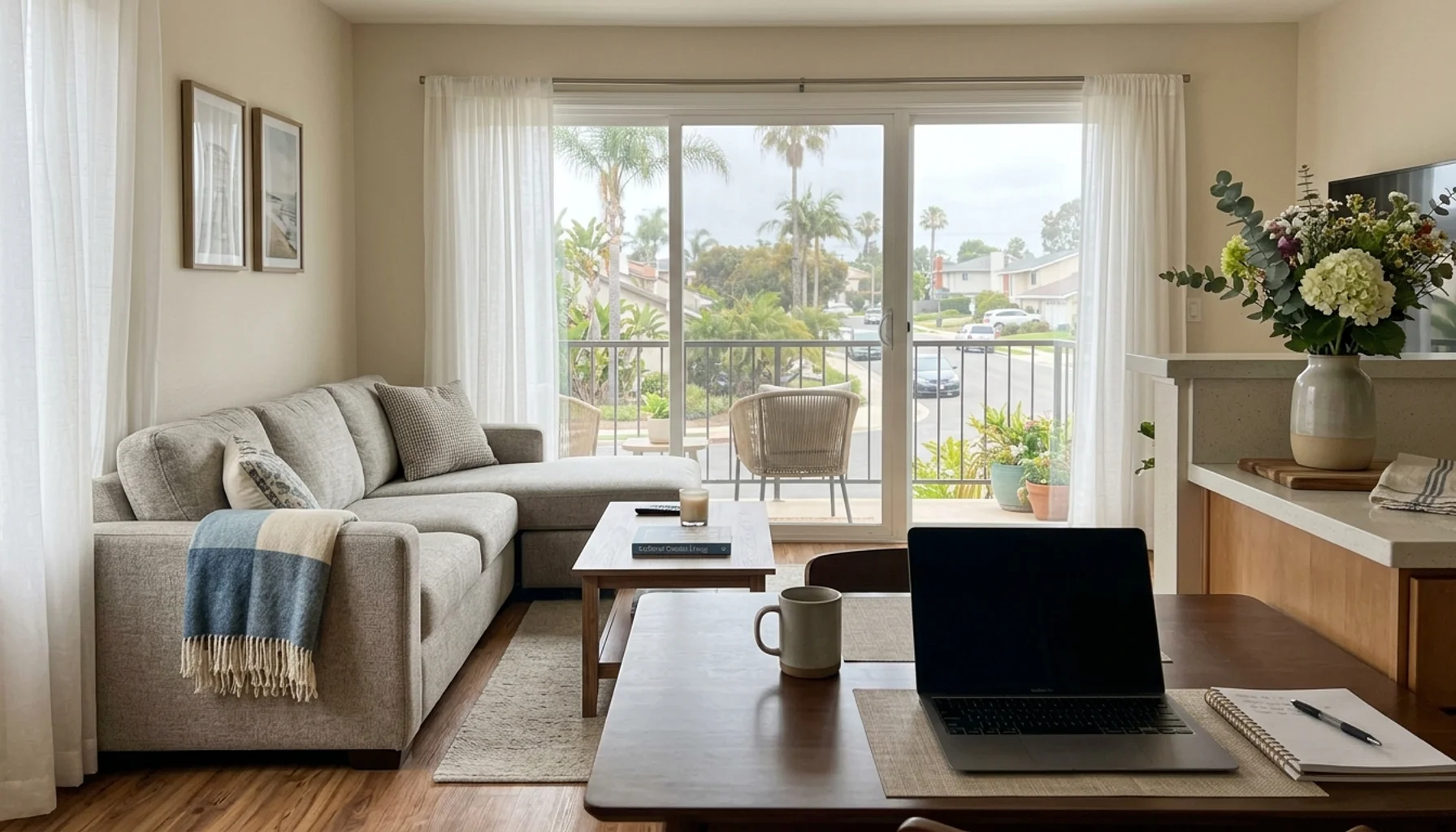
A well-prepared Carlsbad rental — the small details behind a higher Airbnb search ranking.
Airbnb ranks listings based on a combination of price, quality, popularity, and availability, and no single hack moves a listing from page three to the top of search results. As West Coast Homestays has seen across the 80-plus coastal San Diego properties we manage, the operators who consistently rank higher on Airbnb treat it as an ongoing operating discipline, not a one-time listing edit. Fast responses, calibrated pricing, and open calendars drive that outcome.
Key Takeaways
Airbnb's own Help Center confirms four core ranking inputs: listing quality, popularity, price, and location relevance to the guest's search.
Responding to inquiries within 24 hours and keeping your acceptance rate high are both factors Airbnb explicitly ties to search placement.
Properties using dynamic pricing saw a 36.3% average increase in gross revenue per unit across 541 listings in 34 countries, according to a 2026 Your.Rentals/PriceLabs study.
Professionally managed short-term rentals earned 43% higher average daily rates than self-managed listings in the same period, according to AirDNA data.
A cleaning fee inflating your total displayed price can quietly push a listing down in search, since Airbnb ranks against total price before taxes.
Best-in-class Encinitas properties reach 85% or higher occupancy, per AirROI, showing what's achievable when ranking factors are managed together rather than in isolation.
If your Carlsbad or Pacific Beach listing is buried past the first two pages of search results, the fix is rarely a single setting. Airbnb's search algorithm weighs dozens of signals simultaneously, and in 2026 the platform has only gotten more sensitive to guest behavior data like save rates and message response speed.
This guide walks through what Airbnb's own documentation says about ranking, what independent data shows about pricing and occupancy, and where most self-managed hosts leave visibility on the table. We manage properties across Carlsbad, Encinitas, La Jolla, Oceanside, Mission Beach, and Pacific Beach, and the pattern we see repeatedly is that owners fix one variable, like photos, and ignore others that matter just as much.
You'll get a step-by-step framework here, not a vague checklist. Each step ties back to a documented Airbnb ranking input, so you can prioritize the changes that move the needle first.
What Actually Determines Airbnb Search Ranking?
Airbnb search ranking is determined by an algorithm that scores listings on quality, popularity, price, and location match to what the guest searched for. According to Airbnb's official Help Center article on how search results work, these four categories combine to decide which listings appear first for a given date range and location.
Specifically, "quality" includes your photos and videos, guest ratings, and host-guest communication history. "Popularity" reflects how often guests view, save, and book your listing relative to similar properties nearby. Airbnb also confirms it prioritizes total price, including cleaning fees and any discounts, when comparing your listing against others in the same search radius.
Location relevance matters most for entire-home listings, since Airbnb tries to match guests to properties near the neighborhood or landmark they searched. A La Jolla oceanview condo and a Mission Beach boardwalk cottage will never compete in the same result set for a guest searching "beachfront San Diego," because Airbnb treats proximity to the search location as a distinct filter, not a minor tiebreaker.
As of 2026, expect the algorithm to weigh recent booking velocity more heavily than older performance history. A listing that stalled for three months but picked up five bookings in the last thirty days will often outrank one with a stronger historical record but flat recent activity.

A property manager reviewing an Airbnb search ranking dashboard on a laptop with charts showing price, quality, and popularity scores
Step 1: Audit Your Listing Quality and Photos First
Listing quality is the foundation of Airbnb's ranking formula, and it starts with photography, not copywriting. Semrush recommends high-resolution images of at least 1,200 by 800 pixels, and Airbnb's own resource center says high-quality photos can improve prominence within your listing category.
Walk through your listing as if you're a guest scrolling through search results on your phone. Your cover photo needs to show the single most compelling feature of the space, whether that's an ocean view from Solana Beach or a renovated kitchen in a North Park bungalow. Generic wide shots of empty rooms rarely convert a scroll into a click.
Beyond photos, Airbnb's guidance specifically calls out showing "the unique characteristics of a space with specific details" as a quality signal. Name the neighborhood in your description, mention walkability to specific landmarks, and describe amenities precisely rather than using vague phrases like "great location."
Common mistake: hosts photograph the property once at listing launch and never update the photos again. If you've since added a fire pit, restaged the primary bedroom, or added a coffee bar, outdated photos undersell what guests are actually paying for. This is exactly the kind of gap our listing optimization process at West Coast Homestays is built to catch during a portfolio audit.
Estimated time: 2-4 hours for a full photo and description refresh, longer if you're hiring a photographer.
Step 2: Improve Your Response Rate and Booking Behavior
Response rate and reservation acceptance behavior are direct inputs into Airbnb's popularity score, and Airbnb explicitly recommends replying to reservation requests within 24 hours to protect your search ranking. Hostfully's data goes further, stating that maintaining a response rate above 90% is one of the single most impactful actions a host can take.
Airbnb also warns against frequently declining reservation requests, since a pattern of declines signals unreliability to the algorithm, not just to future guests. If you're regularly turning down inquiries because dates don't work or the guest count exceeds your comfort level, update your listing settings (maximum guests, minimum stay) rather than declining case by case.
Enabling Instant Book is another lever Airbnb calls out directly. Guests filtering search results by Instant Book will simply never see your listing if it's turned off, and Airbnb states this filter setting alone can improve where you land in search for that guest segment.
The pattern we see across our managed portfolio: owners who self-manage while working a full-time job often let messages sit for 8 to 12 hours during business hours. That delay compounds daily and quietly erodes response-rate scores. It's one reason burned-out self-managers eventually hand off guest communication entirely.
Do Numeric Pricing "Rules" Actually Affect Airbnb Ranking?
Airbnb's own Help Center and Resource Center never publish a specific numeric formula tying exact percentages or dollar thresholds to search placement. If you see a blog claiming a named numeric rule controls your ranking, treat it skeptically until you can trace it to Airbnb's actual documentation.
What Airbnb does confirm, consistently, are the four pillars covered earlier: quality, popularity, price, and location. Focus your energy on the ranking factors Airbnb has actually published, including response time, calendar openness, Instant Book, and total price relative to your local compset.
If you encounter blog content citing specific numeric thresholds attributed to Airbnb without a link to an official source, verify the claim against Airbnb's own documentation before adjusting your strategy around it. Acting on an unverified rule can lead you to deprioritize factors, like guest communication quality, that genuinely do move your ranking.
Is 4.8 a Good Airbnb Rating?
A 4.8 rating is considered strong on Airbnb and is the specific threshold Airbnb ties to Superhost eligibility, according to Hostfully's guidance on the program's requirements. Airbnb's rating system runs from 1 to 5 stars, and because guests tend to round up when leaving reviews, anything below 4.7 typically signals a listing with recurring guest experience issues.
At 4.8 and above, Airbnb's algorithm treats your listing as a low-risk, high-satisfaction option, which supports better placement in search alongside your response rate and cancellation history. Semrush's guidance for hosts targets at least 10 stays, or three stays spread across 100 days, as a baseline to establish a reliable rating before expecting consistent search visibility.
A single 3-star review from a guest with unreasonable expectations can drag a new listing's average down significantly, since the review count is still small. This is precisely why professionally set guest expectations and pre-arrival communication matter more for new listings than for established ones with a deep review history.
In our experience managing properties from Oceanside to La Jolla, the ratings that slip fastest are tied to inconsistent turnovers, not amenities. A guest who arrives to a property that doesn't match the listing photos will mark down accuracy even if everything else about the stay was fine.
Does an "80/20 Rule" Apply to Airbnb Ranking?
Airbnb does not define or endorse a rule by this name for search ranking anywhere in its official documentation. It sometimes surfaces informally in host forums as shorthand for the general business principle that a small share of your effort, like pricing and photos, drives most of your booking outcomes, but that's host folklore, not platform policy.
Instead of chasing an unverified formula, prioritize the ranking levers Airbnb has confirmed matter: total price against your compset, calendar openness, response speed, and review quality. Worked together, these areas account for the overwhelming majority of ranking movement we see across the properties West Coast Homestays manages.
Start with price and calendar accuracy since those affect every single search a guest runs, then layer in quality signals like photos and reviews, which compound over time as your booking history grows.
Which Is Better, Superhost or Guest Favorite?
Guest Favorite and Superhost serve different purposes in Airbnb's ecosystem, and neither strictly outranks the other for search placement. Superhost status, which Hostfully ties to a 4.8+ rating and a low cancellation rate, rewards consistent hosting performance over a rolling evaluation period and gives guests a trust signal tied to the host's track record.
Guest Favorite is a listing-level designation Airbnb introduced to highlight properties with consistently high ratings and positive reviews across a broad set of guest experience metrics, independent of how long the host has been active. A brand-new host managing a single exceptional property can earn Guest Favorite faster than they could build Superhost tenure.
Both badges function as trust signals that can influence a guest's click-through decision once your listing appears in results, and strong performance on the metrics behind both tends to lift your underlying algorithmic ranking regardless of which badge you display. Chasing one without maintaining the fundamentals behind it rarely produces lasting results.
Step 3: Get Your Pricing Right for Your Compset
Competitive pricing directly affects Airbnb search ranking because the algorithm compares your total price, before taxes but including cleaning fees, against similar listings in your immediate area. bnbcalc's optimization research recommends keeping cleaning fees under $75 specifically because an inflated fee raises your displayed total price and can push you down in results even if your nightly rate looks competitive.
This is where dynamic pricing becomes less of a nice-to-have and more of a ranking requirement. A 2026 study of 541 Airbnb listings across 34 countries, published by Your.Rentals and PriceLabs, found that properties using dynamic pricing saw a 36.3% average increase in gross revenue per unit and a 37.3% increase in nights booked per unit, compared to static pricing.
Static weekend pricing during summer in Carlsbad or La Jolla is one of the most common ways San Diego hosts leave money on the table, and it also hurts ranking indirectly. A price set too high for a slow Tuesday reduces your booking probability, which lowers your popularity signal, which then compounds against your search placement the following week.
bnbcalc also recommends weekly discounts in the 10 to 15% range, monthly discounts between 20 and 30%, and discounting last-minute dates within 7 days by 15 to 25% to capture gap-night demand. Airbnb's own Smart Pricing tool documentation explains how to automate baseline adjustments, though most professional operators layer additional strategy on top of the platform default.
Dynamic pricing errors, when a tool is miscalibrated or left unattended for weeks, can cost an owner $30,000 to $40,000 in a single month across a portfolio the size we manage. That loss never shows up as an obvious red flag; it just shows up as a quietly underperforming calendar month after month. Our revenue management team recalibrates pricing weekly against live compset data specifically to avoid that failure mode.

A coastal California vacation rental exterior at golden hour with a calendar and pricing chart overlay showing seasonal rate adjustments
Step 4: Open Your Calendar and Loosen Booking Restrictions
Calendar availability is a direct Airbnb ranking input, and the platform states plainly that the more open dates a host offers, the more likely that listing is to appear in search results. A calendar with scattered blocked dates or an overly restrictive minimum-stay policy signals lower availability to the algorithm even if your actual occupancy is strong.
Airbnb specifically recommends reducing booking restrictions, including minimum and maximum stay length, to increase how often your listing matches a guest's search parameters. If you require a 3-night minimum stay every weekend in Encinitas but most searches in your market are for 2-night getaways, you're filtering yourself out of a large share of eligible searches before pricing or photos ever come into play.
This doesn't mean abandoning minimum-stay strategy altogether. During peak summer weekends when demand in Carlsbad and Pacific Beach is highest, a 2 or 3-night minimum protects you from single-night bookings that fragment your calendar and limit revenue per turnover. The mistake is applying that same restriction in the shoulder season, when Carlsbad hotel occupancy dropped to 63.4% in January 2026 before climbing to 78% by March, according to the City of Carlsbad's economic update using Smith Travel Research data.
Accuracy also plays into this category. Airbnb evaluates whether your calendar reflects real-time availability, and a listing that shows open dates but declines every inquiry for those dates will get penalized in future search placement.
Data and Benchmarks: What Top-Performing Listings Actually Look Like
Top-performing Airbnb listings in San Diego's coastal markets share a common profile: high occupancy and consistent review scores above 4.8, paired with average daily rates that stay competitive against their compset. According to AirROI, the strongest-performing 25% of Carlsbad Airbnb properties maintained occupancy of 71% or higher, while the top 10% reached 85% or higher.
Encinitas shows a similar pattern. AirROI reports the average Airbnb occupancy rate in Encinitas at 48%, already above the California state average of 43%, while best-in-class Encinitas properties reach 85% or higher occupancy. That gap between average and top-tier performance is almost entirely explained by the ranking factors covered in this guide: pricing discipline, calendar openness, and response speed.
- What Airbnb Says
- Response time: Respond within 24 hours
- Total price: Prioritized against similar nearby listings
- Reviews: Ratings and reviews factor into quality score
- Calendar openness: More open dates improve search appearance
- Instant Book: Improves matching for guests filtering by it
- Dynamic pricing: Not explicitly named, but ties to price competitiveness
- Response time: Maintain response rate above 90% (Hostfully)
- Total price: Keep cleaning fees under $75 where possible (bnbcalc)
- Reviews: 4.8+ rating supports Superhost eligibility
- Calendar openness: Avoid blanket minimum-stay rules in shoulder season
- Instant Book: Enable unless you need manual screening
- Dynamic pricing: 36.3% average revenue increase across 541 listings (Your.Rentals/PriceLabs, 2026)
Professionally managed short-term rentals earned 43% higher average daily rates than self-managed listings in the same period, according to AirDNA data. That gap reflects exactly the combination of factors in the table above, applied consistently rather than fixed once and forgotten.
Deep Dive: Why Most Ranking Advice Misses the Diagnostic Step
Most Airbnb ranking guides list the same tactics: better photos, faster responses, competitive pricing, Instant Book. What they skip is how to diagnose why your specific listing is underperforming before you start changing things. Without that diagnostic step, you risk fixing a variable that was never the problem.
Start by pulling your listing's impressions, or how often it appeared in search, against your actual booking count for the same period. If impressions are healthy but conversions are low, your problem is likely price or photos, not calendar or response rate. If impressions themselves are low, the issue sits further upstream: your calendar may be too restrictive, or your price may be filtering you out of the guest's search range entirely.
Search intent also matters more than most host guides acknowledge. A guest searching for a 2-night Pacific Beach weekend behaves differently than one searching for a 30-night Mission Beach corporate stay. Airbnb's algorithm weighs booking window and stay length differently across these searches, which means a listing optimized purely for weekend leisure travelers may underperform in monthly-stay search results, and vice versa.
Local market saturation is another factor competitor content rarely addresses. In a neighborhood like Pacific Beach with a high concentration of similar 2-bedroom listings, standing out on quality and price becomes harder simply because your compset is larger and more competitive than it would be for a unique La Jolla clifftop property with fewer direct comparables.
There's also a real tradeoff between over-optimizing for conversion and protecting guest satisfaction. Hosts who write misleading descriptions to boost click-through rates, exaggerating a view or overstating walkability, tend to see short-term booking gains erased by accuracy dings in reviews within a few months. Airbnb's review system, detailed in its official reviews documentation, specifically scores accuracy as a guest-rated category, and a pattern of low accuracy scores works against your quality signal long term.
Across the portfolio West Coast Homestays manages, the properties that rank highest and stay there aren't the ones with the flashiest one-time optimization push. They're the ones where pricing, calendar, and guest communication get reviewed weekly, not quarterly.
Practical Guidance: How to Prioritize These Ranking Levers
If you're working through this list on your own, prioritize in this order rather than tackling everything simultaneously:
Fix your pricing first. It affects every search a guest runs, and a miscalibrated rate can undo good work elsewhere.
Open your calendar and reconsider minimum-stay rules for shoulder-season dates specifically.
Audit your response time and enable Instant Book if you're not using manual approval for a specific reason.
Refresh photos and listing copy to reflect the property as it exists today, not as it existed at launch.
Review your last 10 guest reviews for recurring accuracy or communication complaints, and fix the underlying issue, not just the review response.
Common mistakes to avoid: declining reservation requests instead of adjusting listing settings, and leaving a cleaning fee unchanged for years while nightly rates rise around it. Treating Superhost status as a ranking guarantee rather than a byproduct of consistent execution is another one worth watching for. None of these mistakes are fatal individually, but stacked together across a full calendar year, they explain most of the gap between average and top-tier listings shown in the data above.
Trade-off to understand: reducing restrictions to improve ranking can increase your operational load, since more open dates and shorter minimum stays mean more frequent turnovers. That's a real cost, and it's exactly why Carlsbad property owners increasingly hand cleaning and turnover logistics to a dedicated team rather than trying to absorb the extra volume themselves.
Frequently Asked Questions
How much does Airbnb management cost?
Airbnb property management fees typically range from 15 to 30% of gross booking revenue for full-service management, while co-hosting arrangements where the owner retains listing control typically run 10 to 18%. Exact rates vary by property size, service scope, and market, so confirm current pricing directly with any management company you're evaluating.
What are the rights of a co-host on Airbnb?
Airbnb's official Co-Host Terms of Service define the specific permissions a co-host can be granted, which may include managing the calendar, messaging guests, and adjusting pricing, depending on what access level the primary host assigns. The scope of a co-host's rights is set by the host account owner and can be as limited or extensive as the arrangement specifies.
How much does an Airbnb manager cost?
An Airbnb manager's cost generally falls within the same 15 to 30% of gross revenue range used across the short-term rental management industry, though full-concierge services with interior design and 24/7 guest support tend toward the higher end of that range. Always ask for a written breakdown of what's included before comparing quotes.
Should I choose a local San Diego Airbnb manager or a national company like Vacasa or Evolve?
A local San Diego manager typically has deeper knowledge of neighborhood-specific compsets, permit requirements, and HOA restrictions that vary significantly between areas like La Jolla, Mission Beach, and Carlsbad. National platforms offer scale and brand recognition, but local operators like West Coast Homestays can often respond faster to maintenance issues and calibrate pricing against hyper-local demand data rather than broad regional averages.
How much does Airbnb property management cost?
Airbnb property management cost depends on the service tier, ranging from lighter co-hosting support around 10 to 18% of revenue to full-service management around 15 to 30%, which typically bundles guest communication, cleaning coordination, and dynamic pricing. Property owners should request an itemized fee structure rather than a single blended percentage.
How do Airbnb property managers charge?
Most Airbnb property managers charge a percentage of gross booking revenue rather than a flat monthly fee, which aligns the manager's incentive with growing your occupancy and rate. Some also charge separate fees for cleaning, maintenance markup, or one-time setup and listing optimization work, so ask what's bundled into the base percentage versus billed separately.
Does price actually affect Airbnb search ranking?
Yes. Airbnb's Help Center confirms that total price before taxes, including fees and any discounts, is one of the factors weighed when ranking your listing against similar homes in the same search area. A high cleaning fee that inflates your displayed total can hurt your position even when your base nightly rate is competitive.
Conclusion: Ranking Higher Means Managing All Four Factors Together
Ranking higher on Airbnb in 2026 comes down to consistently managing quality, popularity, price, and location match, not chasing a single algorithm hack. The data is clear: dynamic pricing alone drove a 36.3% average revenue increase across 541 listings in a 2026 study, and professionally managed listings earned 43% higher daily rates than self-managed ones. Owners who treat these four factors as an ongoing weekly practice consistently outperform those who set up their listing once and check back quarterly.
Getting this right in San Diego's coastal short-term rental market means adjusting to what's actually happening in your specific neighborhood's compset, not applying generic advice built for a different city. West Coast Homestays has helped owners across Carlsbad, Encinitas, and Pacific Beach turn underperforming listings into consistent top-of-search results by managing pricing, calendar strategy, and guest communication as one connected system rather than isolated tasks.

a professional property manager at a modern workspace reviewing rate adjustment calendars on dual
If your listing has stalled in search despite good reviews, West Coast Homestays can walk through your specific ranking factors, pricing against your local compset, and identify exactly where visibility is being lost. Our team currently manages 80-plus properties across San Diego's coastal neighborhoods, and dynamic pricing recalibration alone has driven revenue increases of $121,000 and counting for owners who assumed their pricing was already dialed in.
Content powered by inkSTR.co


