
Airbnb vs VRBO for Owners: Fees, Revenue and Who Wins
Choosing between two booking platforms comes down to the numbers behind each stay.
For most owners weighing airbnb vs vrbo for owners, the split is simple: Vrbo charges a lower host fee, while Airbnb's broader audience typically brings more booking volume. At West Coast Homestays, we manage 80+ properties across Pacific Beach, Mission Beach, La Jolla, and North County San Diego, and the setups that earn the most list on both platforms with synced calendars and coordinated pricing. Here is how to decide which one leads for your home.
Key Takeaways
Your fee model matters more than the headline rate: Airbnb's host cost ranges from about 3% (split-fee) to 15.5% (host-only), while Vrbo's pay-per-booking cost is about 8%.
Vrbo keeps more of each dollar, so it can book roughly 8% less gross revenue than Airbnb and still tie on net payout under the host-only model.
Vrbo's annual subscription, reported at $499, can beat per-booking fees for any full-time rental with meaningful revenue.
In Pacific Beach, the fee gap equals roughly 12 booked nights at a $206 average daily rate, so filling the calendar outweighs fee savings.
Listing on both platforms through a synced channel manager is the standard professional setup, but it requires disciplined pricing and double-booking protection.
Fee terms vary by account, so confirm them inside your own Airbnb and Vrbo accounts before modeling income.
Choosing between Airbnb and Vrbo used to be a question about audience. In 2026 it is also a question about fee architecture. AirDNA reports 19,234 active Airbnb, Vrbo, and Booking.com listings in San Diego as of 2026, so your rental competes in a crowded field whichever site you pick. Platform fees decide how much of each booking survives.
Published comparisons also disagree with each other. Most examples use hypothetical bookings that never connect to your occupancy, your cleaning costs, or your neighborhood. Vrbo's subscription often gets a footnote.
This guide fills those gaps. You get the fee models side by side, a repeatable method for estimating your own net income, Pacific Beach data as a worked example, and clear guidance on who should lead with which platform.
Airbnb vs VRBO for Owners: How Do the Fees Compare in 2026?
Platform fees are the per-booking charges that Airbnb and Vrbo deduct from your payout, and the fee model attached to your account matters more than any single headline percentage. Airbnb runs a split-fee model and a host-only model. Vrbo runs a pay-per-booking model and an annual subscription.
What fees do Airbnb hosts pay per booking?
Under the split-fee model, hosts who manage listings directly pay about 3% of the booking subtotal, and guests pay a service fee commonly reported near 14%. Under the host-only model, which applies to hosts connected through a property management system (PMS), the host pays 15.5% of the subtotal and guests see no separate service fee. Check the fee line in your hosting account to see which applies to you.
What fees do Vrbo owners pay per booking?
Vrbo's pay-per-booking model charges owners a 5% commission, applied to the subtotal including cleaning fees, plus 3% payment processing. That lands near 8% in the U.S. and Canada. Travelers pay a separate service fee that comparisons put between 6% and 12%. Vrbo belongs to Expedia Group, and rates reported for Europe and Australia run higher, so confirm terms for your region.
- Airbnb split-fee
- Host charge: About 3% of subtotal
- Guest service fee: Commonly reported near 14%
- Typical fit: Hosts managing directly, not connected through a PMS
- Host charge: 15.5% of subtotal
- Guest service fee: No separate guest fee shown
- Typical fit: Hosts connected through a PMS or channel software
- Host charge: 5% commission plus 3% processing
- Guest service fee: Typically 6% to 12%
- Typical fit: Owners with lighter or seasonal volume
- Host charge: $499 per year, removes per-booking commission
- Guest service fee: Same guest fee structure
- Typical fit: Owners with steady year-round bookings
Which fee model will your account land in?
Your setup decides it. If you answer messages and set prices inside the Airbnb app alone, you may qualify for the split-fee model. If a manager or software tool syncs your calendar through a PMS, expect the host-only structure. West Coast Homestays checks which structure applies before modeling numbers for an owner, because the same property can show very different net payouts under each one.
Is Vrbo's annual subscription worth it?
The subscription pays off once your bookings are large enough. If it replaces only the 5% commission, break-even sits near $10,000 in annual bookings. If it also removes payment processing, break-even drops to roughly $6,200. San Diego's average short-term rental revenue is around $38,700 according to AirDNA data, so most full-time rentals clear either threshold comfortably.
Do Hosts Make More Money on Vrbo or Airbnb?
Host earnings on Airbnb and Vrbo are the net payout left after platform fees, cleaning costs, and vacant nights, not the fee percentage alone. Vrbo keeps more of each booking dollar. Airbnb typically fills more nights. Which one earns you more depends on how many extra nights Airbnb's audience delivers for your specific property.
Start with the per-booking math. On a $1,000 booking, the host-only fee leaves about $845, while Vrbo leaves about $920. A published estimate puts the gap at roughly $3,750 on $50,000 of annual gross revenue. That is a real difference, and it is the reason Vrbo gets attention from owners.
Now flip the math. Airbnb under host-only keeps 84.5 cents of each dollar and Vrbo keeps 92 cents. That means Vrbo can book about 8% less gross revenue and still tie you on net. If Airbnb brings you more than 8% additional gross, it wins. If it brings less, Vrbo wins.
One published comparison models three hypothetical owners to show how the nights assumption drives the answer.
- Booked nights
- Airbnb only: 200
- Vrbo only: 130
- Both platforms: 240
- Airbnb only: $195
- Vrbo only: $210
- Both platforms: $205
- Airbnb only: $39,000
- Vrbo only: $27,300
- Both platforms: $49,200
- Airbnb only: $6,045
- Vrbo only: $2,184
- Both platforms: $5,904
- Airbnb only: $32,955
- Vrbo only: $25,116
- Both platforms: $43,296
Vrbo-only nets $7,839 less than Airbnb-only despite far lower fees, because the scenario assumes 70 fewer booked nights. The both-platform case nets about 31% more than Airbnb-only. These are hypothetical assumptions, not market data. Treat the booked-nights line as the variable you must validate for your own home.
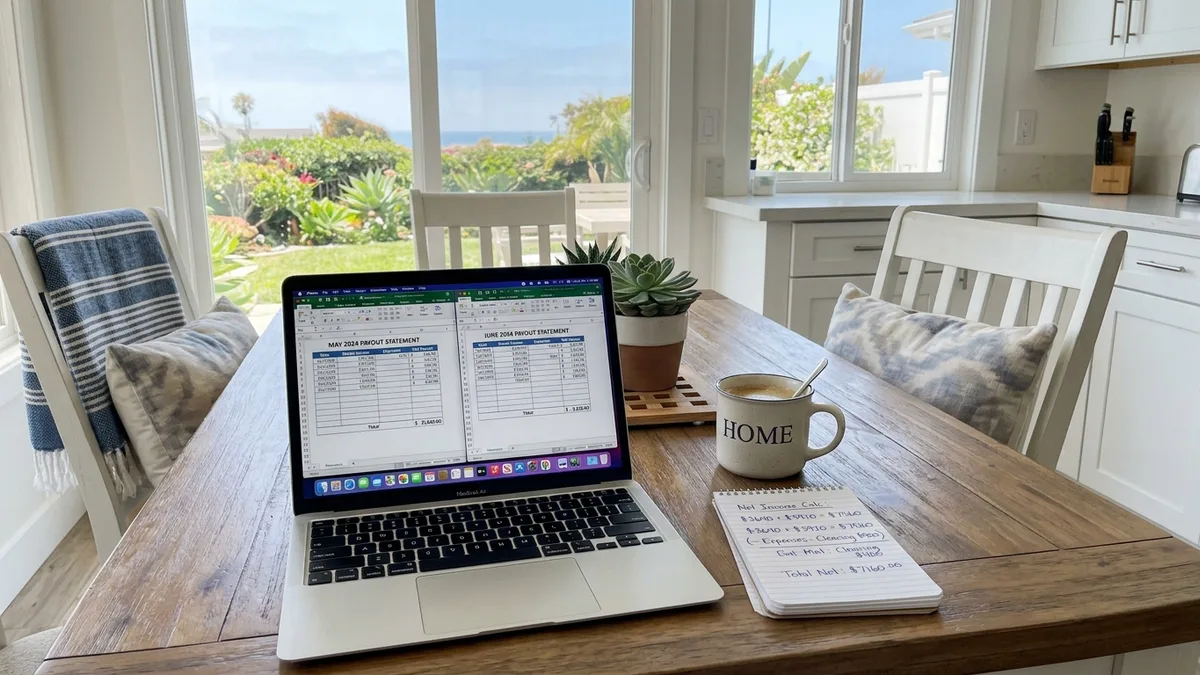
Comparing Airbnb vs VRBO for owners by net payout
Why Do People Use Vrbo Instead of Airbnb?
Vrbo is a vacation rental marketplace built around whole-home stays, and comparisons consistently describe its audience as families and groups booking longer trips. Owners choose it for a lower host fee, an annual subscription option, and a guest pool that searches specifically for entire homes rather than a mix of rooms and studios.
Guests, on the other hand, pay more to book. Vrbo's traveler service fee typically runs 6% to 12%, and that fee appears on top of your nightly rate. A listing that looks fairly priced on Airbnb can look expensive on Vrbo at the same rate. Some owners respond by pricing slightly lower on Vrbo. Others accept fewer bookings in exchange for a bigger net per stay.
Which platform is best for whole-home rentals?
Vrbo is purpose-built for whole homes, so a three-bedroom house sleeping six to eight guests fits its audience well. Airbnb also carries a large share of whole-home inventory and usually exposes your listing to more travelers overall. Our recommendation for a multi-bedroom Pacific Beach or Carlsbad house: list on both and let the calendar tell you which platform earns its keep. Our earlier guide to Vrbo management in San Diego covers that setup in more depth.
Which Platform Fits Your Property Type and Owner Situation?
Platform fit is the match between your property's size, guest profile, and your own time, and it should drive which site leads your distribution. A La Jolla oceanview condo and a Mission Beach boardwalk cottage compete in entirely different comp sets, so treating them the same is a common mistake.
Choose Airbnb first if
You own a studio, one-bedroom, or condo, you are launching a listing with no reviews, or your typical guest books a few nights. Airbnb's larger audience and broader property mix help a new listing gather its first bookings. Dense coastal markets such as Pacific Beach reward that visibility. Our Pacific Beach Airbnb management team sees this pattern on smaller units regularly.
Choose Vrbo first if
You own a larger whole home built for families and groups, you want longer average stays, and you prefer a lower per-booking cost. Four-bedroom homes in Carlsbad and Encinitas fit this profile. The subscription option also makes sense once bookings are steady across the year.
Choose both if
You are an out-of-state owner, a second-home owner, or a burned-out self-manager who wants fewer vacant nights without checking two apps at midnight. Two channels double your message inbox unless a professional team or synced tools handle it. The same logic applies to owners in La Jolla and Oceanside, where guest demand differs by street and season.
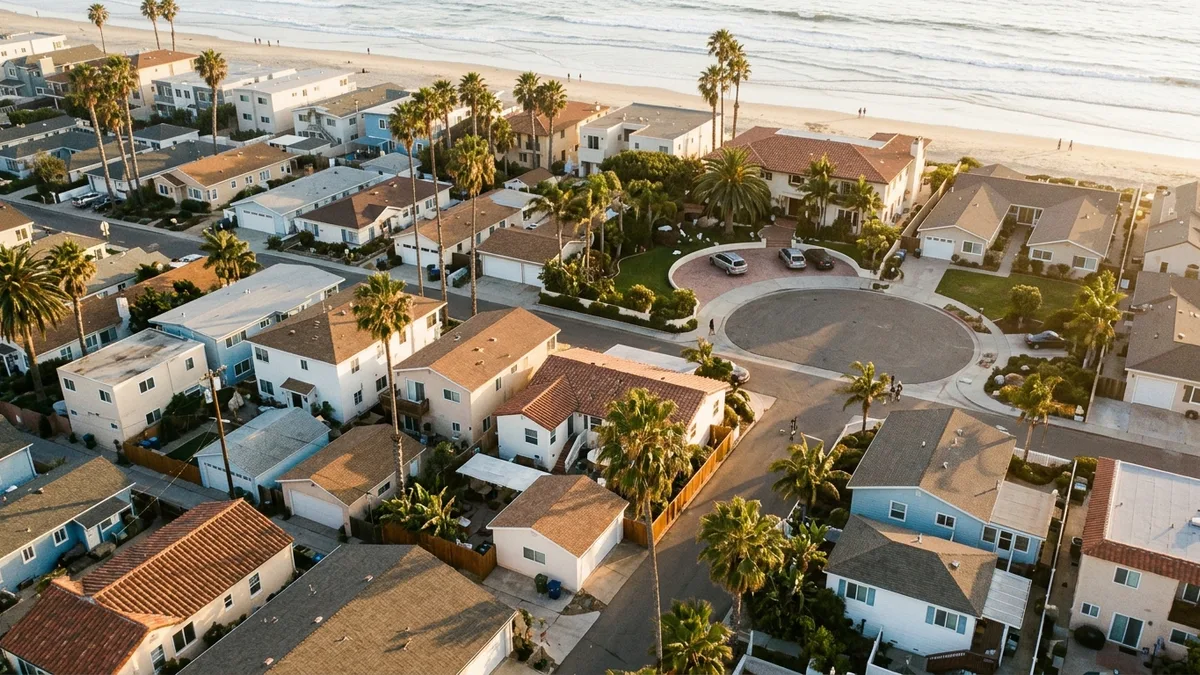
An aerial view of a North San Diego County coastal neighborhood with beach cottages, palm trees, and a whole-home rental with a driveway
How Do You Calculate Your Own Net Income on Each Platform?
Net owner income is gross booking revenue plus cleaning fees collected, minus platform fees, turnover costs, taxes, discounts, and channel-management costs. Most online comparisons stop at platform fees. You need a method that uses your own occupancy, rate, and stay length instead of someone else's hypothetical.
Pull your trailing twelve months of booked nights and average daily rate from your calendar or from AirDNA market data.
Decide whether you will hold the same nightly rate on both platforms or adjust for guest-visible fees.
Apply the fee model your account actually uses. Remember that Vrbo's commission applies to the subtotal including cleaning fees.
Subtract turnover costs and add back any cleaning fees you collect from guests.
Deduct discounts, cancellations, and chargebacks, which vary by platform and by guest mix.
Add the cost of channel software or labor if you run more than one calendar.
Divide the result by available nights, not booked nights, so vacant nights count against the platform that produced them.
How do guest fees change conversion?
Guest-visible price affects which platform converts better at the same nightly rate. Under Airbnb's host-only model, guests see no separate service fee. On Vrbo, travelers add a 6% to 12% fee on top. So an identical rate can look pricier on Vrbo while costing you less in host fees. Test it: run the same rate on both for a full season and compare booked nights, not page views.
What costs do fee comparisons skip?
Payout timing, taxes, and operating costs sit outside most fee tables. San Diego requires a valid Short-Term Residential Occupancy license for stays under one month, regardless of platform, and operating without one is unlawful. The City of San Diego STRO official page lists current requirements and fee schedules. Budget for that and for transient occupancy tax handling before you compare platforms.
What Does Pacific Beach Data Say About Choosing a Platform?
Pacific Beach is a coastal San Diego neighborhood where short-term rental performance is sensitive to seasonality and competition, which makes it a useful test case for any platform decision. Market data for the twelve months ending May 2026 shows roughly $37,000 in annual revenue, 45% occupancy, a $206 average daily rate, and 164 booked nights for a typical listing.
Put fees on that calendar. Using 164 nights at $206, gross revenue is about $33,800. The host-only fee takes roughly $5,240, while Vrbo's takes roughly $2,700. The gap is about $2,500, or roughly 12 booked nights at that rate. This is simple arithmetic rather than a forecast, and it assumes identical bookings on each platform.
That 12-night figure is the useful part. If a second platform adds 12 or more booked nights, it covers the fee gap. At 45% occupancy, a typical Pacific Beach listing has more than 200 vacant nights a year to fill. June through August is the peak period, and the shoulder months are where extra distribution earns its keep.
Competition is dense too. In one open-data analysis, ZIP code 92109, covering Pacific Beach and Mission Beach, held about 30.2% of active San Diego short-term rental licenses. In the Pacific Beach portfolio we run, owners often compare platforms by headline fee and ignore the calendar, when the calendar is where the money moves.
Should You List on Both Airbnb and Vrbo?
Multi-channel listing means publishing the same property on Airbnb, Vrbo, and other sites through a channel manager that syncs calendars and rates automatically. Multi-platform distribution has become the working standard for professional short-term rental operators. The upside is fewer vacant nights. The risks are double bookings and pricing that drifts out of sync.

a property owner at a modern desk reviewing multiple pricing dashboards on two monitors showing
Pricing is where owners lose the most. A 2026 study across 541 Airbnb listings in 34 countries found that dynamic pricing lifted gross revenue per unit by an average of 36.3%. The reverse also holds: miscalibrated dynamic pricing can cost $30,000 to $40,000 in a single month. West Coast Homestays pairs pricing software with human oversight for exactly that reason. Airbnb's own help center explains how to turn Smart Pricing on or off, and we cover the Vrbo side in our Vrbo dynamic pricing guide. For a broader view, this dynamic pricing strategy breakdown shows how operators adjust rates through the year.
The platform is one lever, and the mix of stay types is another. A San Diego operator running a hybrid short-term and mid-term strategy reached $136,732 in annual revenue against a $98,800 STR-only projection, with occupancy 25% above the comp set. The winning move was filling the calendar with the right guest type in each season, not choosing one site.
How do you list a property on Vrbo?
Listing on Vrbo follows a short sequence, though screens and requirements change, so confirm each step inside your account.
Create an owner account and enter your property details, photos, and description.
Choose between pay-per-booking and the annual subscription.
Set nightly rates, minimum stays, and your cleaning fee.
Connect your calendar to your channel manager or Airbnb calendar so availability syncs.
Confirm your San Diego license and tax registration before publishing.
Publish, then test-book a blocked date to verify the sync works in both directions.
What Mistakes Do Owners Make When Choosing Between the Two?
The most common platform mistake is treating the fee percentage as the decision instead of net income per available night. Owners also carry assumptions across platforms that do not hold, and each one costs real money over a season.
Comparing headline rates only. A lower fee means nothing if the platform books far fewer nights for your home.
Ignoring the PMS trigger. Connecting software can move an Airbnb account into the host-only structure, which changes your net.
Assuming reviews transfer. A new Vrbo listing starts without reviews. In our experience, five-star reviews correlate with roughly 20% more revenue, so protect your review score on both sites. Airbnb documents how its reviews for stays work.
Running static rates. Static pricing on summer weekends is one of the most common ways San Diego hosts leave money on the table.
Skipping local compliance. A license problem affects every platform at once.
Managing two inboxes by hand. Manual channel management across platforms is not sustainable past two properties.
Cost of professional help matters here too. Our San Diego property management cost guide breaks down what owners pay and what they get back. For a market overview, see our Airbnb management in San Diego page.
Which Platform Should You Lead With in 2026?
The honest answer to airbnb vs vrbo for owners is that Vrbo keeps more of each dollar, Airbnb typically brings more nights, and your own calendar decides which matters more. Start with Airbnb if you own a smaller unit or a new listing. Lead with Vrbo for larger whole homes with longer stays. Add the second platform once your channel manager and pricing rules are ready.
Your next step is concrete: pull twelve months of booked nights, apply the fee model your account uses, and compare net per available night. Visit California forecasts 275.5 million visits in 2026, up 1.5% from 2026, so demand is growing, and the owners who capture it will distribute across more than one channel with pricing they can trust.

If you want this math run on your specific property, West Coast Homestays handles channel management, dynamic pricing, and guest operations for 80+ properties across San Diego's coastal neighborhoods, with a $121K+ revenue increase from dynamic pricing and listing optimization. Book a call and we will walk through your numbers and show where the gaps are.
Frequently Asked Questions
How much does Airbnb management cost, and does the platform change it?
Short-term rental management fees are commonly reported at 15% to 25% of gross rental revenue, and the exact rate varies by property and service level. Platform fees from Airbnb and Vrbo are separate and come out before your payout. Confirm current terms for your property directly with West Coast Homestays.
Should I choose a local San Diego manager or a national company?
West Coast Homestays is a San Diego-based management company running short-term and mid-term rentals across Pacific Beach, Mission Beach, La Jolla, Encinitas, Carlsbad, and Oceanside, with 80+ properties under management. When comparing local and national companies, ask who sets your pricing, how they handle city licensing, and whether reporting is transparent.
What fees do Airbnb hosts pay per booking?
Airbnb hosts pay about 3% under the split-fee model, with guests paying a service fee of roughly 14%. Hosts connected through a property management system pay a host-only fee in the mid-teens and guests see no separate fee. Verify your current rate in your hosting account.
What fees do Vrbo owners pay per booking?
Vrbo owners typically pay a 5% commission plus 3% payment processing in the U.S. and Canada. Travelers pay a separate service fee of roughly 6% to 12%. An annual subscription, reported at $499, removes the per-booking commission.
What is the best vacation rental site for whole homes?
Vrbo is built around whole-home stays, while Airbnb carries a wider property mix and usually a larger audience. For a multi-bedroom family home, listing on both with a synced calendar tends to work better than committing to one site.
Do I need a license to list on Airbnb or Vrbo in San Diego?
Yes. The City of San Diego requires a valid Short-Term Residential Occupancy license for stays of less than one month, regardless of platform. License availability is limited by tier, so check the city's official page for current rules.
Is Vrbo's annual subscription worth it?
It depends on your annual bookings. Break-even falls between roughly $6,200 and $10,000 in bookings, depending on whether payment processing is still charged. Full-time San Diego rentals usually exceed that, but confirm the current terms before switching.


