AI Pricing Comparison: Filling Gap Nights in San Diego
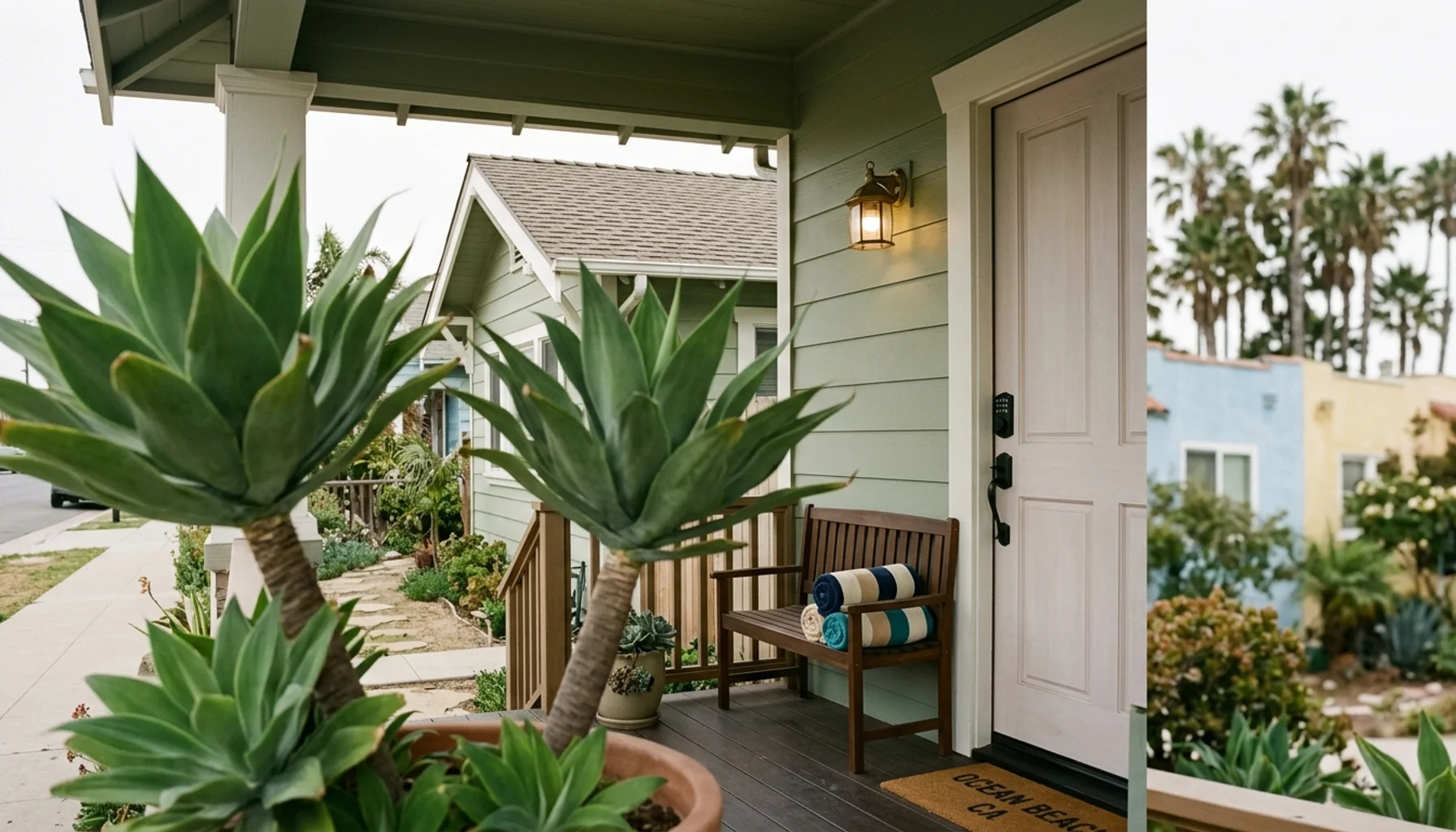
A ready-to-book San Diego porch: empty nights are mostly a calendar-rule problem.
In any AI pricing comparison for coastal San Diego rentals, software that lets you control minimum stays and last-minute rules fills gap nights better than hands-off automation. PriceLabs and Wheelhouse typically give you that control; Airbnb's built-in Smart Pricing gives you the least. At West Coast Homestays, we manage 80+ properties across San Diego's beach neighborhoods, and the pattern holds: the tool matters less than who calibrates it.
Key Takeaways
Dynamic pricing software adjusts nightly rates automatically. A 2026 study of 541 Airbnb listings in 34 countries (Your.Rentals / PriceLabs) found average gross revenue per unit rose 36.3% and nights booked rose 37.3%.
Gap nights, the one to three unsold nights between bookings, are mostly a minimum-stay and calendar-rule problem. Tools with orphan-night and last-minute settings outperform tools that only move the base rate.
Airbnb Smart Pricing suits first-time hosts who want zero setup. PriceLabs and Wheelhouse suit owners who will tune rules. Managed revenue management suits owners who do not want to watch a calendar.
Dynamic pricing errors can cost $30,000 to $40,000 in a single month, so a pricing tool left on default settings is a real financial risk.
A hybrid short-term and mid-term strategy filled gaps software could not: one San Diego operator reached $136,732 in annual revenue at 83.29% occupancy.
Gap nights are the one- to three-night holes between confirmed bookings that a rigid minimum-stay rule or a static nightly rate leaves unsold. On a coastal San Diego calendar, they often cluster on midweek shoulder-season dates and in the awkward stretch after a long summer booking. They drain income quietly from second-home owners and first-time hosts alike.
This guide compares the tools owners ask about most in 2026: Airbnb's built-in Smart Pricing, PriceLabs, Wheelhouse, and managed revenue management. Each gets scored on one question: does it fill gap nights without giving away rate? You will also find a method for setting pricing on a San Diego rental, a look at where a mid-term strategy beats software, and a verdict on which tools suit small portfolios or multifamily buildings.
Across the properties West Coast Homestays manages, the most common revenue leak we find when auditing a new owner's account is a pricing tool running on default settings. Software is cheap to subscribe to. Calibrating it for Pacific Beach versus La Jolla takes judgment.
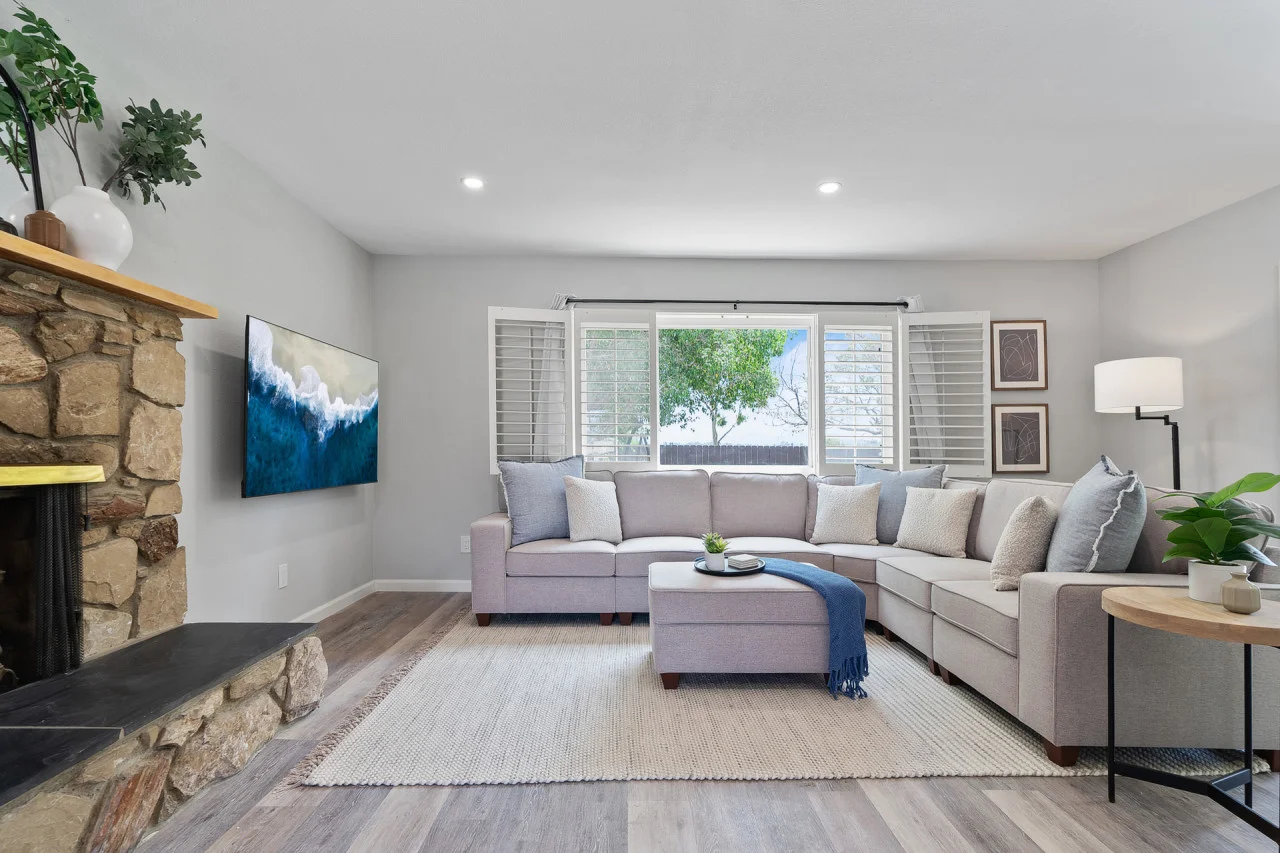
A modern living room featuring a spacious gray sectional sofa with decorative pillows, a stone fireplace, and large windows overlooking outdoor landscaping. The room is accented with contemporary artwork, recessed lighting, and elegant furnishings including a wooden side table and floor lamp.
What Does AI Pricing Software Automate for a Beach Rental?
AI pricing software, often called dynamic pricing software, is a tool that adjusts nightly rates and booking rules automatically based on demand signals such as booking pace, seasonality, local events, and competitor rates. For a rental in Pacific Beach or Encinitas, it typically automates five jobs: daily rate updates pushed to Airbnb and Vrbo, minimum-stay changes, last-minute discounts, orphan-night pricing, and comp set tracking.
It does not automate judgment. Software cannot decide whether a beach cottage should chase a three-night weekend or hold for a seven-night summer guest, and it cannot tell you that your photos are costing you clicks.
Pricing is also one slice of AI in property management more broadly. AI now drafts guest replies, sorts maintenance requests, and flags review risks, while multifamily platforms use it for leasing chat and rent recommendations. For nightly rentals, pricing is the use with the clearest revenue effect.
How Does an AI Pricing Comparison Look for San Diego Gap Nights?
An AI pricing comparison for gap nights scores each tool on four criteria: control over minimum stays, separate handling of orphan nights, depth of local demand data, and the oversight the tool needs from you. The table below summarizes how the main options compare. Features change often, so verify the current feature set on each vendor's site before you subscribe.
- Control over gap-night rules
- Airbnb Smart Pricing: Limited; you set a price floor and ceiling
- PriceLabs: Broad rule settings for minimum stays, last-minute discounts, and orphan nights
- Wheelhouse: Strategy settings with manual overrides
- Managed revenue management: Rules set and adjusted by a revenue manager per property
- Airbnb Smart Pricing: Airbnb's own demand data only
- PriceLabs: Market and neighborhood comp data
- Wheelhouse: Market data with comp set views
- Managed revenue management: Software data plus local event and comp set knowledge
- Airbnb Smart Pricing: Lowest
- PriceLabs: Moderate to high
- Wheelhouse: Moderate
- Managed revenue management: Low
- Airbnb Smart Pricing: First-time hosts testing the market
- PriceLabs: Owners who like to tune rules; small portfolios
- Wheelhouse: Owners who want guided setup
- Managed revenue management: Owners who want results without calendar babysitting
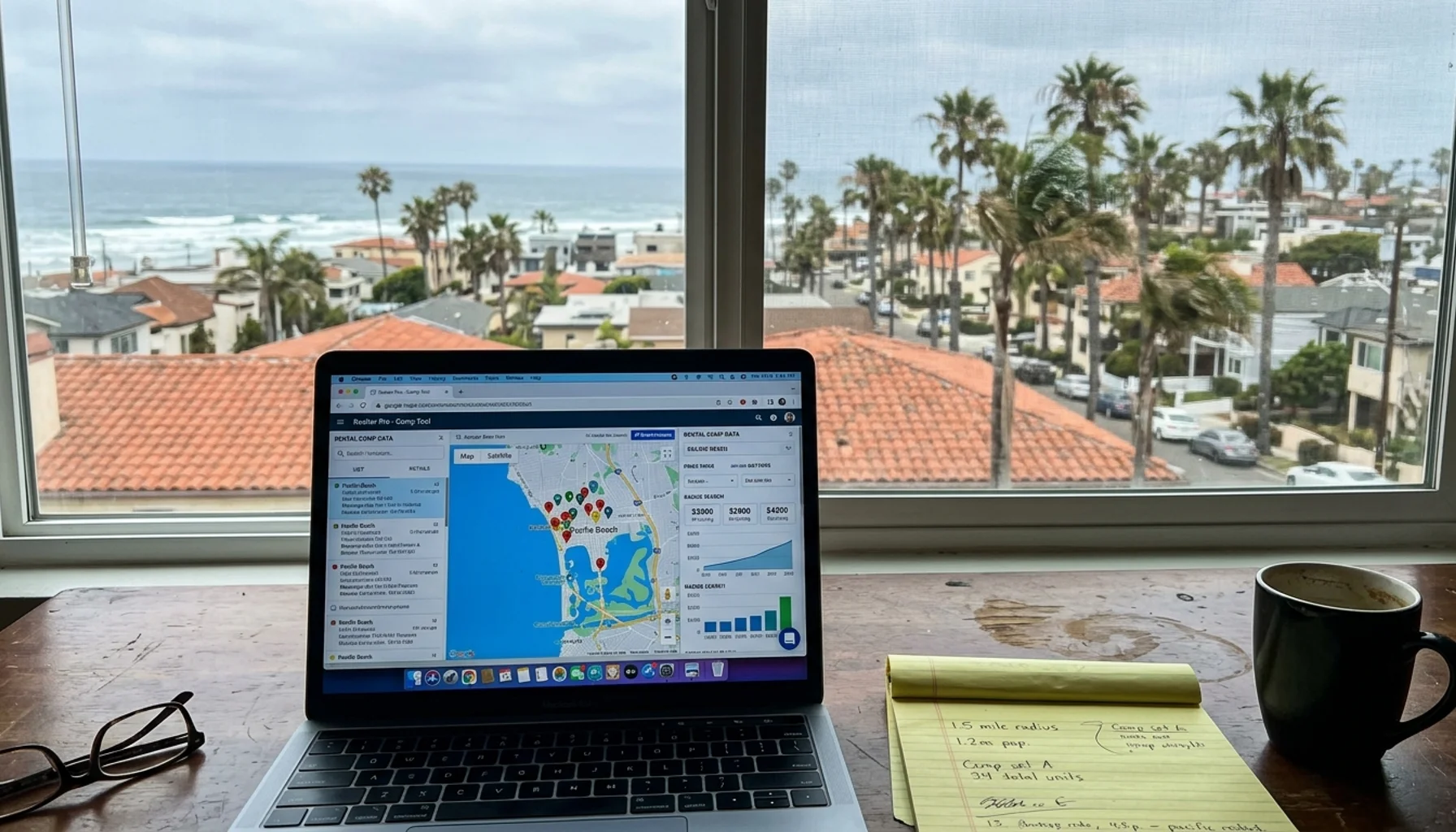
Comparing neighborhood demand and comp set data for a Pacific Beach short-term rental.
Airbnb Smart Pricing
Airbnb Smart Pricing is the platform's built-in tool that moves your nightly price within a minimum and maximum you set. It needs no separate subscription or integration, which makes it the easiest starting point for first-time hosts. The drawbacks are control and visibility: you cannot see the comp set logic, and it prices Airbnb only, so a Vrbo calendar can drift out of step. Check Airbnb's help article on turning Smart Pricing on or off to confirm how it works for your listing today. Skip it if you list on more than one channel.
PriceLabs
PriceLabs is a third-party dynamic pricing platform that connects to your property management system or channel manager and pushes rates to your calendar. It suits owners who will tune rules: minimum stays by season, last-minute discounts, and orphan-night adjustments. The software is rarely the problem. The risk is leaving defaults on, which prices a Mission Beach cottage the way it prices an inland condo.
Wheelhouse
Wheelhouse is another third-party pricing platform that builds rates from market data and lets you layer strategy settings and manual overrides on top. Owners who want guidance instead of a blank rule builder may find it more structured, though you still own the calibration. Confirm current features and pricing on its site, since both shift often.
Managed revenue management
Managed revenue management means a person reviews the software's output against local knowledge instead of trusting it unattended. West Coast Homestays works this way: software supplies the baseline, and our revenue team adjusts for comp set movement, events, and gap-night risk. This approach has produced a $121K+ revenue increase for owners who believed their pricing was already optimized. Fees vary by property, so confirm current terms with us directly.
What Does the Research Say About Dynamic Pricing Results?
Dynamic pricing results are the measurable changes in revenue, occupancy, and average daily rate (ADR) that follow a switch from static to software-adjusted rates. The 2026 study of 541 Airbnb listings across 34 countries, reported by Your.Rentals and PriceLabs, found gross revenue per unit up 36.3%, nights booked up 37.3%, and gross bookings up 46.2%, while ADR slipped 0.7%.
That last figure matters for gap nights. Dynamic pricing fills calendars through volume rather than higher rates. AvantStay's 2026 analysis puts the annual revenue lift at 10% to 40%, and BoringHost's 2026 summary says most studies land between 20% and 30%. Because vendors publish many of these numbers, read them as a ceiling for well-tuned setups.
Low-season demand shows how much room exists. AirROI reported that average low-season occupancy fell to 46.1% in its 2026 reporting, a figure that is not San Diego specific. It still explains why shoulder-season gap nights deserve the most pricing attention.
How Do You Set Pricing and Fill Gap Nights in a San Diego Rental?
Setting pricing for a San Diego rental means choosing a cost-based floor, a comp set-based target, and booking rules that let software sell short stays without underpricing them. Follow these steps in order.
Build a neighborhood comp set. A La Jolla oceanview condo and a Mission Beach boardwalk cottage compete in entirely different sets. Match by neighborhood, bedroom count, and view.
Set a floor from your costs. Include cleaning, platform fees, and taxes so no automated discount drops you below break-even. Confirm current tax obligations with the City of San Diego.
Shorten minimum stays in shoulder season. Longer minimums suit summer weekends; one- and two-night holes need a rule that allows them.
Turn on last-minute discounts with a cap. A modest, capped discount on inside-window gaps beats a vacant night.
Sell flexibility. Early check-in and late checkout have produced $5,500 to $6,500 a year in added revenue for a property in our portfolio.
Review weekly and override for events. Automation handles routine days. A person handles exceptions.
Static pricing during summer weekends is one of the most common ways San Diego hosts leave money on the table. A floor set too low is the second, because it lets a tool fill gap nights with bookings that lose money after cleaning.
Can a Mid-Term Rental Strategy Fill Gaps That Pricing Software Cannot?
A mid-term rental (MTR) is a furnished stay that typically runs a month or longer, aimed at relocating workers, insurance placements, and traveling professionals. A hybrid strategy sells nightly stays in peak weeks and books MTR guests across the slow stretches that no discount can fill.
One San Diego operator we work with ran this hybrid approach and reached $136,732 in annual revenue at 83.29% occupancy, 25% above their comp set occupancy and well past a $98,800 STR-only projection. Across our portfolio, hybrid structures have produced revenue 39% to 66% above compset. Corporate placements can be larger still: we have placed a property in an insurance contract worth $20,000 a month and a 13-month relocation contract worth $18,000 a month.
Mid-term stays follow different rules than nightly stays. Before you shift part of your calendar, review the City of San Diego's short-term residential occupancy page and confirm how your property is classified.
Do Gap Nights Behave Differently Across San Diego Coastal Neighborhoods?
Neighborhood gap-night patterns are the differences in how and when calendar holes appear in each coastal submarket, shaped by guest type, walkability, and minimum-stay norms. A tool trained on market-wide averages smooths those differences away, so your comp set matters more than the software brand. The notes below reflect what we see in our own portfolio, not published per-neighborhood occupancy data.
Pacific Beach and Mission Beach lean on boardwalk-adjacent weekend demand, which makes midweek holes the main problem. Our work on Pacific Beach Airbnb management concentrates there. Mission Beach also sits under a separate license tier from most city neighborhoods, so confirm availability before you buy.
La Jolla oceanview condos draw longer stays and a different guest, and La Jolla Airbnb management starts with a comp set that has little overlap with the beach cottages to the south.
North County behaves differently again. Encinitas Airbnb management centers on surf-town weekends and family stays. In Carlsbad, Carlsbad Airbnb management often mixes leisure demand with mid-term guests. Oceanside draws a similar crossover, as our Oceanside Airbnb management clients see.
Del Mar has a small inventory, and Del Mar Airbnb management rewards patient rate-setting over aggressive discounting. Solana Beach sits between Del Mar and Encinitas, so Solana Beach Airbnb management uses blended comp sets. Inland, El Cajon Airbnb management follows different demand drivers than the beach, so coastal assumptions misprice it. For a county-wide view, see our overview of Airbnb management in San Diego.
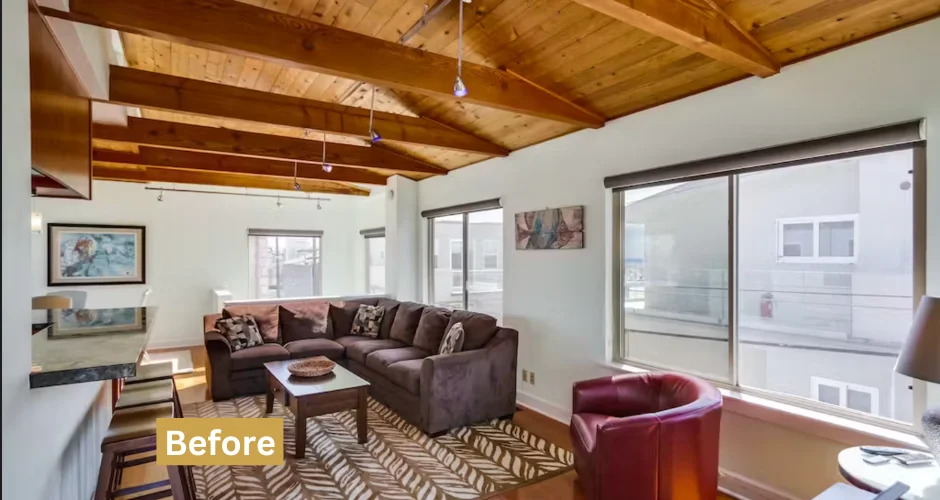
A spacious living room with exposed wooden beam ceiling, brown sectional sofa, and large sliding glass doors opening to a bright balcony. The room features modern furnishings, framed artwork, and a geometric patterned area rug.
Which AI Pricing Tool Fits Small Portfolios, and What About Multifamily?
The right AI pricing tool for a small portfolio is the one you will actually maintain. For one to three coastal units, the choice comes down to how much time you will spend on rules.
Choose Airbnb Smart Pricing if you own one unit, list only on Airbnb, and want no setup. Accept that you give up control.
Choose PriceLabs if you have two or three units, list on several channels, and will review settings weekly.
Choose Wheelhouse if you want a more guided strategy layer and still plan to make manual overrides.
Choose managed revenue management if you live out of state, run Pacific Beach and Mission Beach units at once, or have burned out on calendar checks.
AI property management software built for multifamily is a different category. It handles rent recommendations on 12-month leases, leasing chat, and maintenance tickets, and it does not price nightly inventory or gap nights. Do not buy it to price a beach cottage. Multifamily tools help a landlord with a rent roll; nightly rental tools help a host with calendar holes.
What Do AI Pricing Tools Miss That a Local Operator Catches?
Local operator oversight refers to a revenue manager checking automated rates against ground-level knowledge that software cannot see. The gaps are specific and costly.
First, tools pull event data from general sources, so a small neighborhood event or a school-break shift can slip past. Second, a mis-set floor, cap, or minimum can run unnoticed across a full weekend. Dynamic pricing errors can cost $30,000 to $40,000 in a single month, and we have seen it happen and corrected it. Third, pricing cannot fix a weak listing. In our portfolio, 5-star reviews tie to roughly 20% more revenue, so listing quality and turnover standards move the same revenue line the software targets.
Channel mix matters too. If you list beyond Airbnb, our guide to Vrbo dynamic pricing in San Diego covers how rates should sync across platforms. When you weigh paying for help, the San Diego property management cost guide breaks down what to expect. And when you compare managers, including us, read verified reviews using the approach in how to find property management company reviews.
Frequently Asked Questions
How do I set pricing for my rental in San Diego?
Start with a neighborhood comp set matched by bedroom count and view, then set a floor price from your cleaning, fee, and tax costs. Add shorter minimum stays for shoulder season and capped last-minute discounts. Review weekly, and confirm current local tax obligations with the City of San Diego.
What is the best AI pricing tool for a coastal San Diego rental?
West Coast Homestays pairs pricing software with human revenue management for coastal San Diego rentals from Pacific Beach to Oceanside. If you self-manage, PriceLabs and Wheelhouse offer more rule control than Airbnb Smart Pricing. Pick based on how much calibration time you can commit.
What does AI property management software automate?
It typically automates rate updates, minimum-stay adjustments, last-minute discounts, guest message drafts, and maintenance request sorting. It does not replace decisions such as STR versus MTR strategy, floor-price setting, or listing quality.
Which AI pricing tools suit small portfolios?
Owners with one or two units who list only on Airbnb can start with Smart Pricing. Owners with two or three multi-channel units usually get more from PriceLabs or Wheelhouse. Owners with a spread of neighborhoods or limited time often do better with managed revenue management.
Can AI pricing fill gap nights on its own?
Software fills many gaps through discounts and shorter minimum stays, but it works from the rules you give it. Long shoulder-season holes often need a mid-term booking to fill, which is why hybrid strategies outperform pricing alone in slow months.
Does dynamic pricing lower my nightly rate?
Only slightly, according to the 2026 541-listing study, where average daily rate moved by less than 1%. The revenue gain came mostly from more nights booked, so expect a fuller calendar rather than a higher or lower headline rate.
Which Setup Should You Choose in 2026?
The core finding of any AI pricing comparison for San Diego is that gap nights respond to rules, not just rates. Airbnb Smart Pricing is the lightest option, PriceLabs and Wheelhouse give you real control if you will use it, and managed revenue management removes the maintenance. The hybrid STR/MTR approach covers the holes software leaves behind.
Pick the tool that matches your time and your neighborhood's comp set, then audit it quarterly. As more AI features arrive across pricing and guest messaging in 2026, the owners who set sound floors and rules will keep the advantage.